
The City…
The port city of Gdańsk can be found on the coast of Northern Poland, located at the mouth of the Motława River, flowing into the Baltic Sea. The city has a vastly complex history featuring periods of German rule, Polish rule and self-determination. It has functioned as a major seaport since the Middle Ages. In 1361, it was incorporated into the Hanseatic League (a network of well-connected and wealthy towns and cities from the Netherlands, Poland, Germany, and Russia), handling trade throughout the continent.
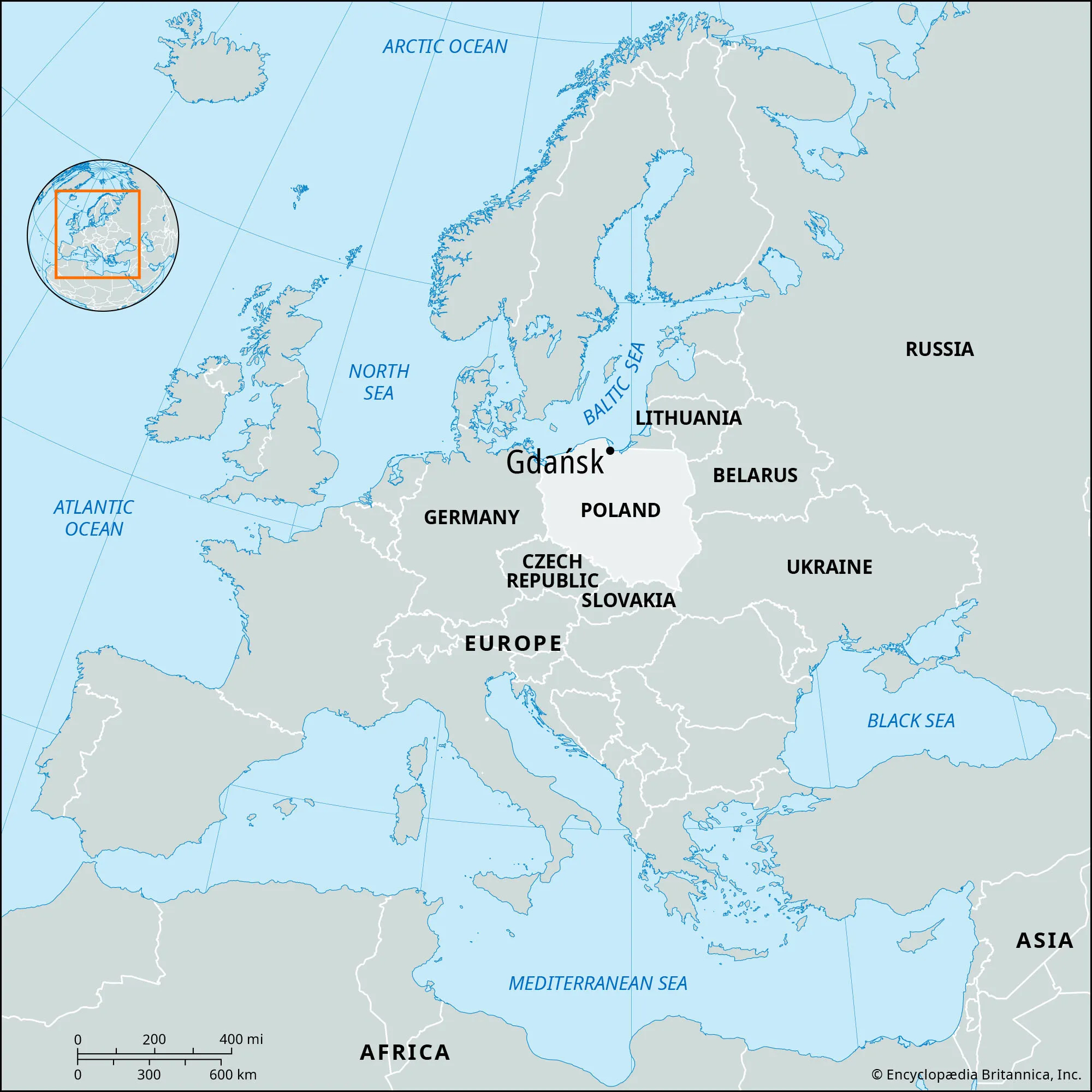
Gdańsk (formerly Danzig) served as a key city in the build-up to and during the Second World War. The city was given ‘Free City’ status from the Treaty of Versailles meaning that instead of being given to the newly created country of Poland, Danzig was turned over to the League of Nations for administration.
France and the United States supported the idea that Danzig should be assigned fully to Poland but this was vehemently opposed by Britain and Germany. In the end, the compromise of stripping the city from Germany, and having it simply be a free city was agreed upon.
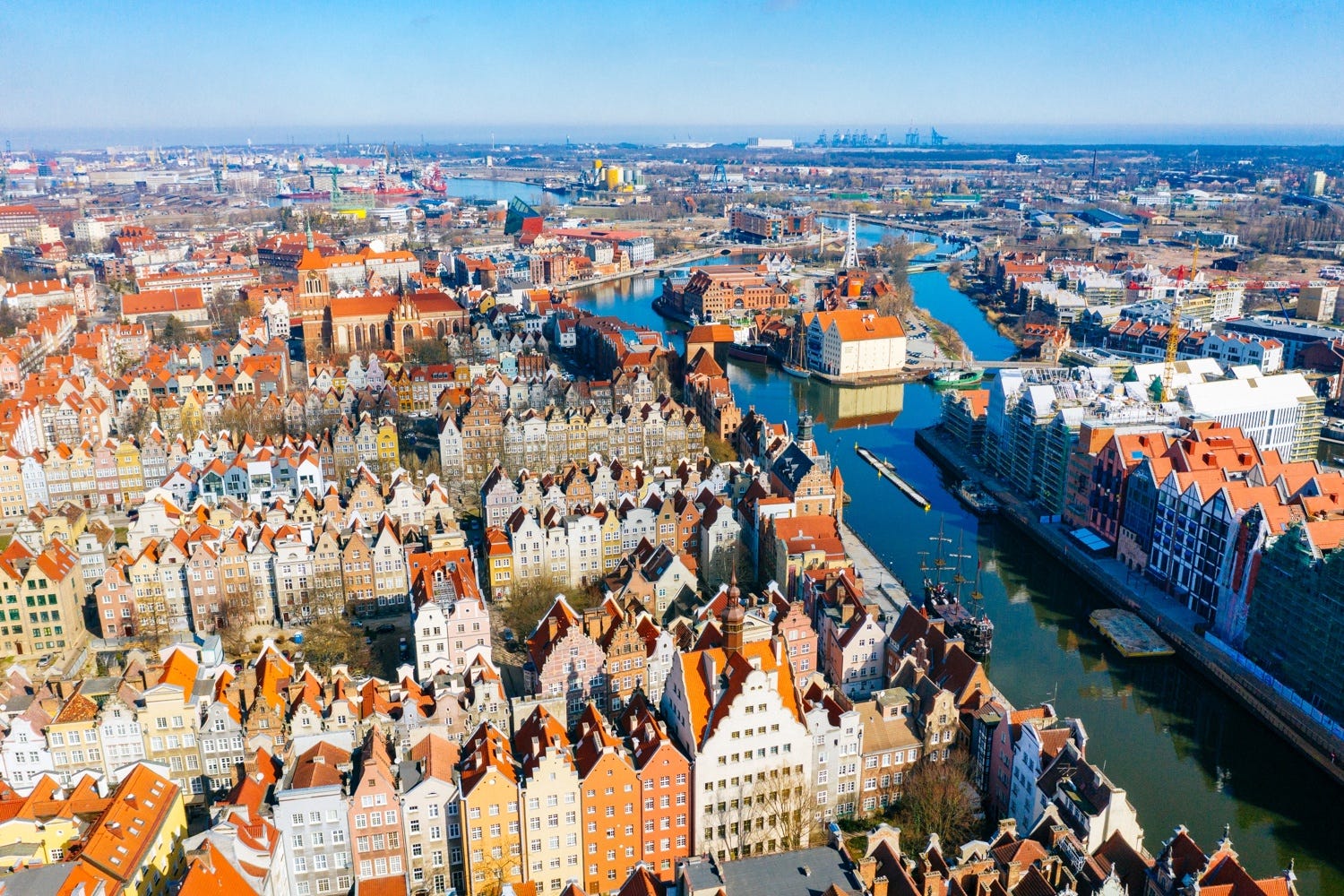
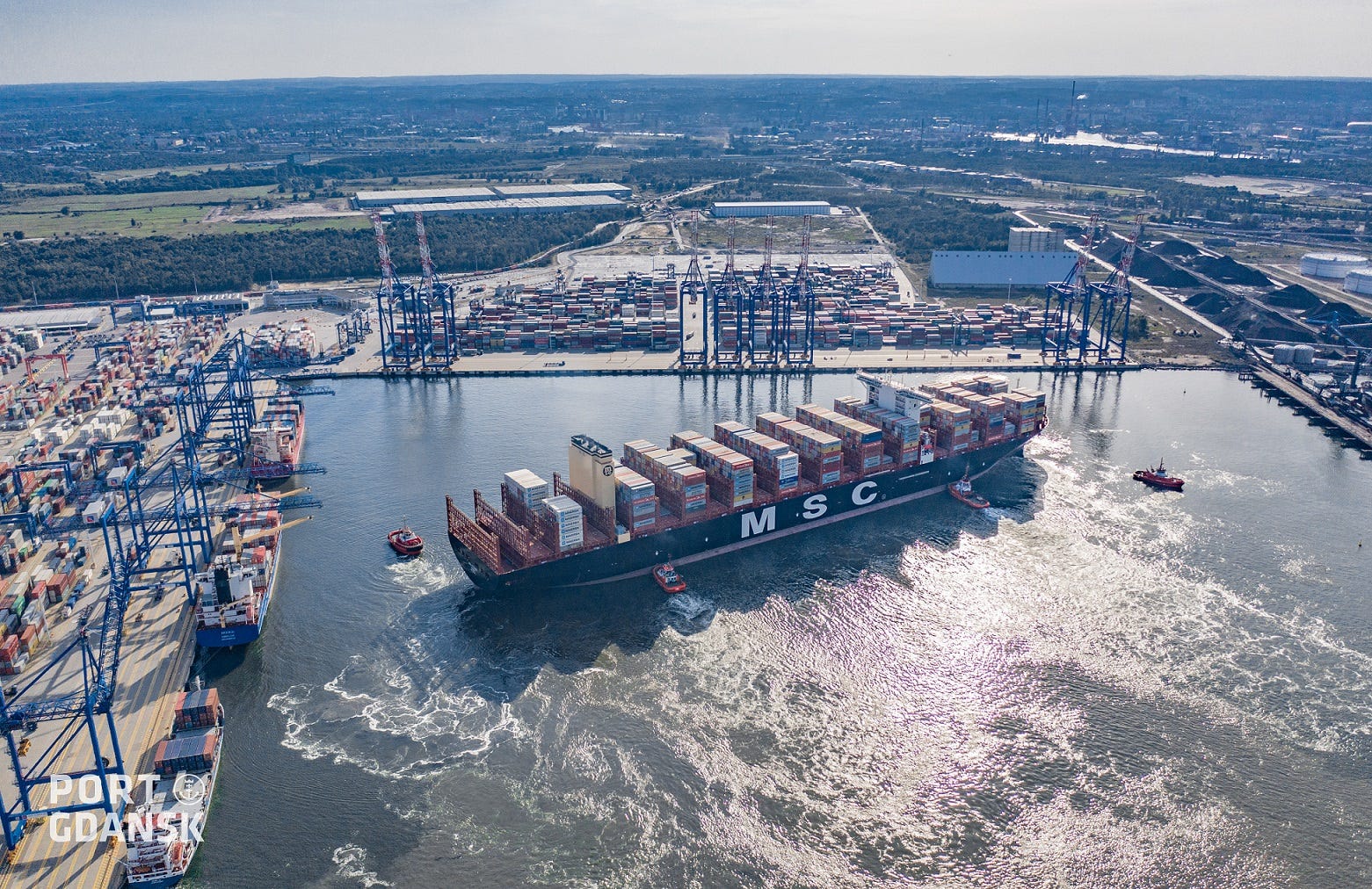
Poland wanted to obtain Danzig as it was a large port city situated geographically at an important strategic point in Europe. The only problem was that Danzig’s population was largely German. In 1929, the census counted the city’s population as being 95% German.
In 1938, the seemingly unstoppable Nazi annexation machine set its sights on the Free City of Danzig. Germany contended that the city should be reunified with the Reich, citing historical and ethnic arguments in support of its case. This did not sit well with Poland who saw Danzig as a future and inevitable part of their plans going forward.
As we know, World War II went on to be the bloodiest war in human history, the build-up was largely based on the city of Danzig. After the war, the city (renamed Gdańsk) returned to Poland, under the rule of the Soviet Union.
In the 1980s, Gdańsk was the birthplace of the Solidarity movement, which helped precipitate the collapse of the Eastern Bloc, the fall of the Berlin Wall and the dissolution of the Warsaw Pact. In July 1980, facing an economic crisis, Poland’s government raised the price of food and other goods, while restricting the growth of wages. These price increases made it difficult for many Poles to afford basic necessities, and so a wave of strikes swept the country.
Amid escalating tensions, a popular forklift operator named Anna Walentynowicz was fired from the Shipyard. As a result, some 17,000 workers began a sit-down strike to campaign for her reinstatement, as well as for an increase in wages.
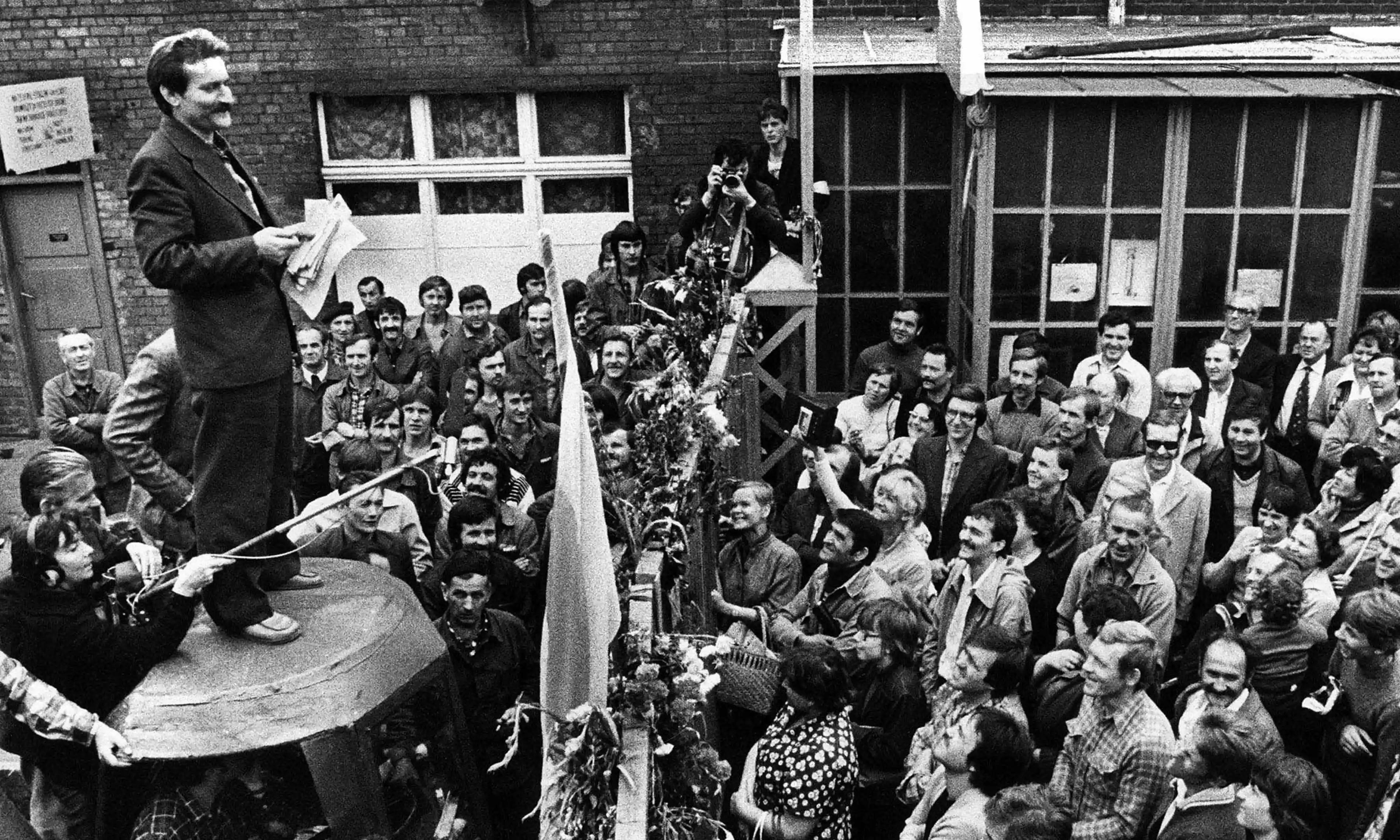
They were led by the former shipyard electrician Lech Walesa, who had himself been fired for union activism four years earlier. Walesa went on to be given the Nobel Peace Prize for his actions and after winning the 1990 election, was named the first democratically elected president of Poland since 1926.
The Club…
Lechia Gdańsk was founded in 1945 by people expelled from Lwów, who were supporters of Poland’s oldest football team Lechia Lwów. In 1945-46, the Soviet Union oversaw ‘population transfers’ which, in short, saw the Eastern borderlands of Poland become part of Ukraine, Lithuania and Belarus. The city of Lwów became Lviv and its Polish inhabitants were forced to leave.


The club’s name comes from the word Lechia which is a poetic name for Poland and is a continuation of the name used by the club based in Lwów. During their early years, Lechia most notably finished third in the Polish top division, before then spending decades in the second and third tiers.
In the early 1980s, the club won the Polish Cup, and the Polish Super Cup, and ventured into European competition for the first time. After having two mergers with other teams in the 1990s the club had to restart from the sixth tier in the early 2000s.
In May 2008, Lechia was promoted again to the Ekstraklasa. Their most prominent top-flight league finish came in 2019, where they ended the season third in the league and again won both the Polish Cup and the Super Cup, before suffering relegation to the second tier in 2023.
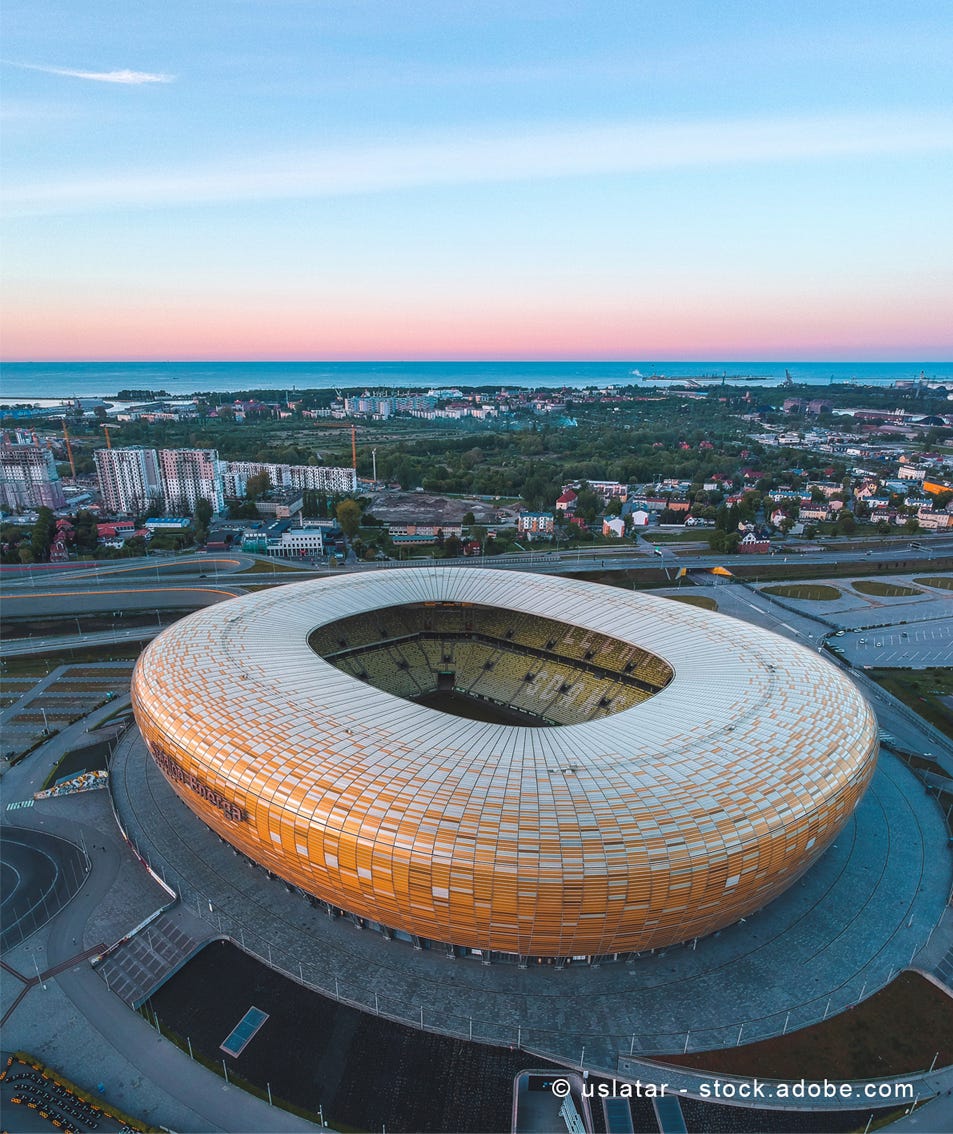
Since 2011, Stadion Gdańsk has been the home of Lechia Gdańsk. The 41,000-capacity stadium was one of the designated venues for UEFA Euro 2012 and hosted four games throughout the tournament. The stadium also played host to the 2021 Europa League Final which saw Villarreal beat Manchester United 12-11 on penalties.
The current Lechia Gdańsk team has an average age of 21.97 years old, so they have a youthful core of players to build around as they look to re-establish themselves in Polish football.
One night in 1983…
Lech Wałęsa joined the Lenin Shipyard (now Gdańsk Shipyard) in 1967 as an electrician. From early on in his career, he took a great interest in workers’ rights and concerns for the conditions in which they were carrying out their jobs. He continuously encouraged his colleagues to protest against the communist regime in power at the time. Wałęsa helped to organise the strikes against rising food prices. Such protests at this time were deemed to be illegal, and so the government responded with force, consequently 44 people were killed and over 1000 injured.
In 1976, Wałęsa was fired from his job at the Gdańsk Shipyard because of his involvement in illegal unions, strikes, and a campaign to commemorate the victims of the 1970 protests. Following his departure from the shipyard, he worked as an electrician for several other companies but his activism led to him meant it was never too long before he was laid off again. Additionally, Wałęsa and his family were under constant surveillance by the Polish secret police; his home and workplace were always bugged. Over the next few years, he was arrested on multiple occasions for participating in dissident activities.
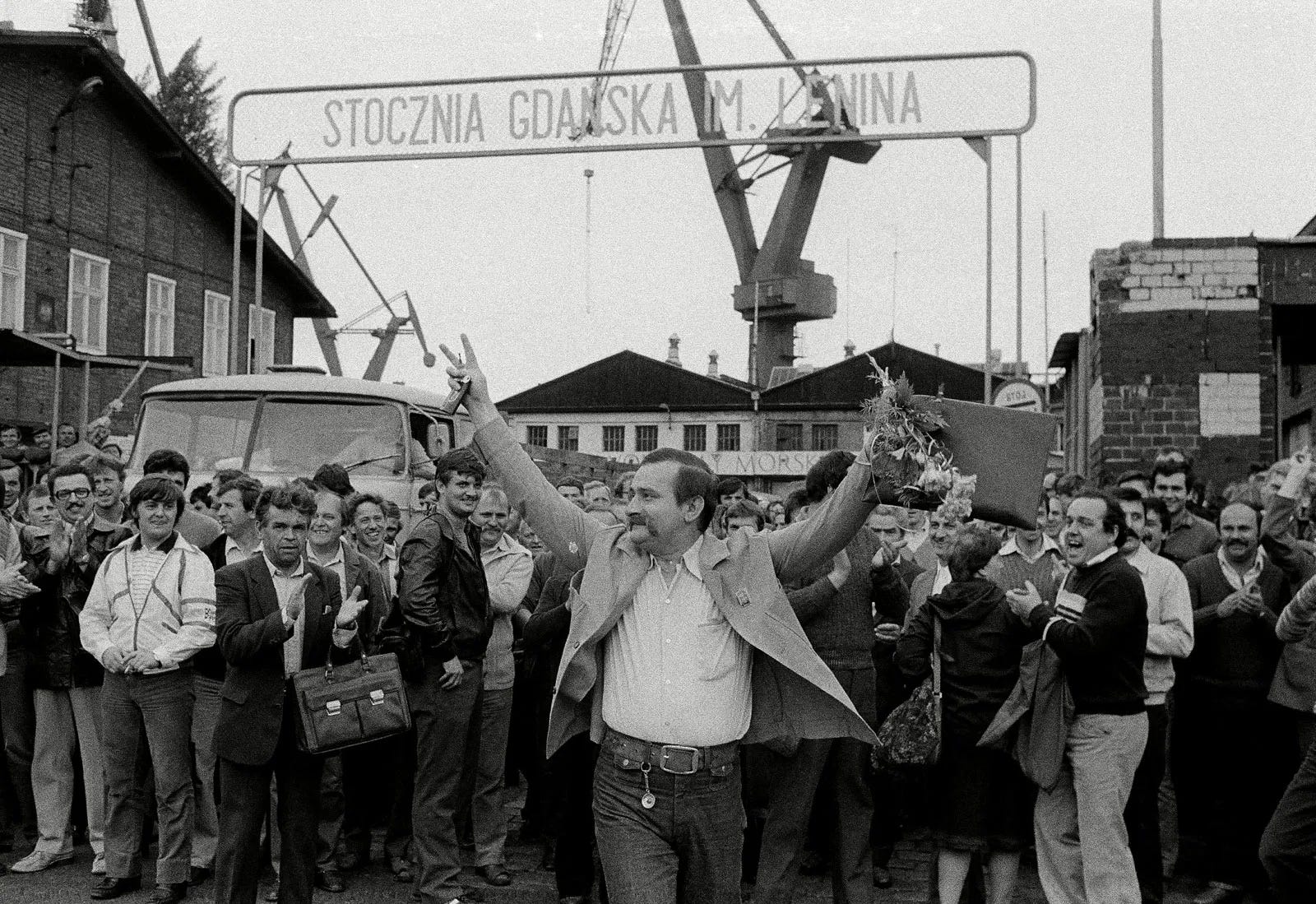
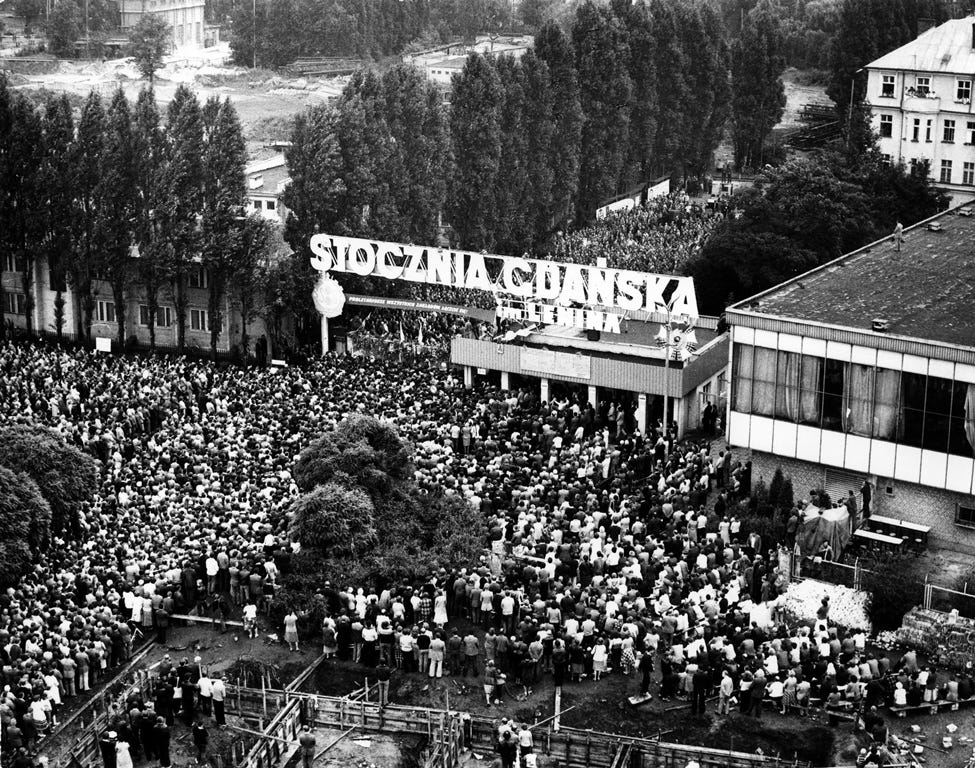
Following the 1980 strikes led by Wałęsa that were a response to another increase in food prices the trade union, Solidarity was born with Wałęsa as its chairman. Solidarity’s membership grew exponentially, eventually claiming over 10 million members—more than a quarter of Poland’s population.
Wałęsa held his position until December 1981, when General Jaruzelski declared martial law in Poland. Wałęsa and many other Solidarity leaders and activists were arrested and he was jailed for 11 months and Solidarity was outlawed. In 1983, Wałęsa was awarded the Nobel Peace Prize for his activism and it is one night in 1983 that inspired this blog post.
On the 28th of September 1983, Lechia Gdańsk took on Italian giants Juventus in the European Cup Winners’ Cup. With this being Lechia’s first foray into Europe the tie was met with great anticipation from fans. Giovanni Trapattoni’s Juve boasted a star-studded squad with the likes of Paolo Rossi, Michel Platini and Zbigniew Boniek on the books.
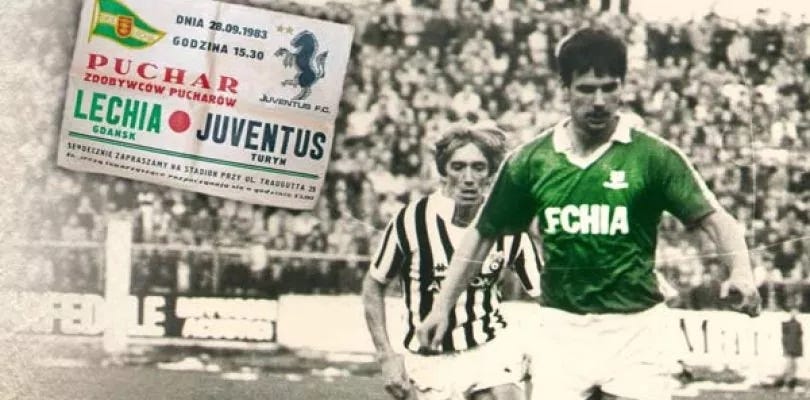
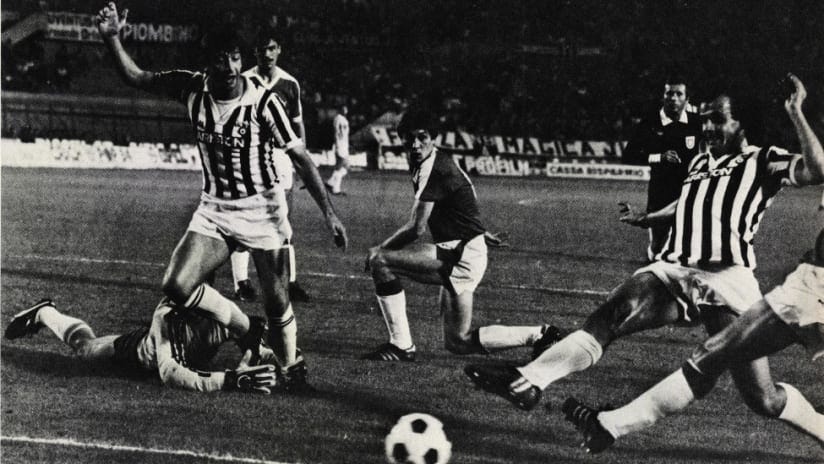
At this time, Poland was a very fragmented country. The hope brought about with the creation of the Solidarity movement had largely disappeared and Jaruzelski’s martial law had just been lifted. The rebellious city of Gdańsk though, was always at the heart of resistance. During these times there were only three places where people could express their anti-system views. The first place was, of course, the shipyard and the second was at the Church of St Bridget. The third? The Lechia Gdańsk stadium.
With the Juventus game being televised, Solidarity and Lech Wałęsa decided there was no better opportunity to remind the public that they were still there, fighting for change. Wałęsa simply had to be there.
With 30,000 people at the game, getting into the stadium relatively incognito was not a problem for Wałęsa. The security forces had information that Wałęsa would be there but could not arrest him as the government did not recognise Solidarity as a political party and therefore Wałęsa was considered a “private person” rather than a political activist.
There had been some attempts to discredit Wałęsa. A day earlier, state television published a heavily edited discussion between Wałęsa and his brother in which he was portrayed as being very vulgar and caring only about money. The authorities had hoped that this would lead to Wałęsa being booed at the stadium.
However, the opposite happened. In the first half, fans were mainly focused on the game but, at half-time, things changed – quite dramatically. Piotr Adamowicz, a Solidarity member went and spoke to the camera crews from NBC and CBS, who subsequently trained their cameras on Wałęsa in the crowd.
It began.
First quietly, then getting louder and louder. “Solidarnosc! Solidarnosc! Solidarnosc!” (Polish for Solidarity). State media tried to report that it was only two or three thousand fans chanting but it was far more than that. It was the whole stadium.
The chanting was so loud that it could be heard in the Lechia dressing room. The manager, Jerzy Jastrzebowski, commented: “We were in the dressing room during half-time when we heard it and it sent shivers down our spines, the whole ground singing ‘Solidarnosc’.”
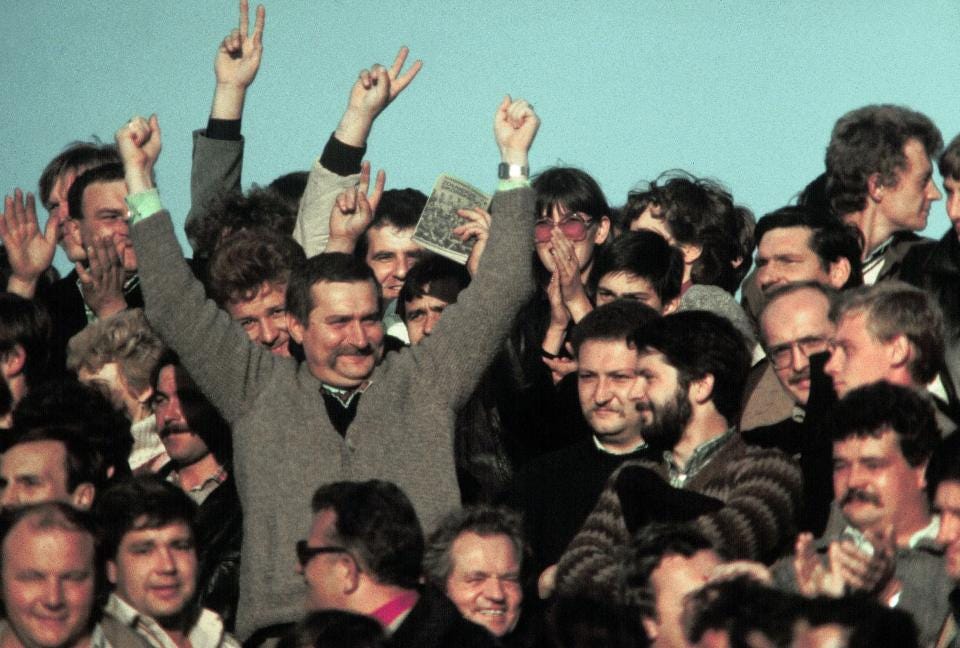
The government-controlled state television was so perturbed about the rest of the country hearing these chants that they delayed the transmission of the second half by six minutes whilst they considered what to do. Eventually, they decided to show it without any sound at all. Lechia lost the game 3-2 and the tie 10-2 but it was irrelevant, a much more important victory had been secured.
To avoid being caught up in any riots Wałęsa thought he should leave the stadium early. He worried for nothing, there was no trouble at all. The Lechia Gdańsk fans felt something special had just happened and did not want to ruin it.
The mid-to-late 1980s were a time of economic and political stagnation in Poland, the shelves at the supermarkets were often empty and ration stamps were introduced. It is estimated that between one and two million Poles left the country in the late 1980s.
By the end of 1990, Wałęsa was the first democratically elected Polish president since 1926. When asked about that night in Gdansk, Wałęsa commented: “Maybe they thought I would be whistled and booed after the TV programme they showed? They hoped the nation would turn their back on me. It would have been my end.”
This was not the case. It was actually a beginning. One of the Solidarity leaders once said: “What happened during the Juventus game kept us going for the next five years.”
Little did they know but in that moment when the Lechia Gdańsk fans chose to show their support for Lech Wałęsa, they changed the course of Polish history.
References:
Karol Nawrocki and Mariusz Kordek: Lechia v Juventus – More Than a Game
https://rfbl-pl.translate.goog/lechia-juventus-1983/?_x_tr_sl=pl&_x_tr_tl=en&_x_tr_hl=en&_x_tr_pto=sc
https://www.inyourpocket.com/gdansk/Solidarity-FC_72959f
https://www.irishexaminer.com/sport/soccer/arid-20195971.html
https://www.porttechnology.org/news/port-of-gdansk-becomes-third-busiest-baltic-sea-port-for-cargo-shipments/
https://polishhistory.pl/solidarity-the-40th-anniversary-of-the-birth-of-the-social-movement/
https://lechiahistoria.pl/artykuly/lechia-gdansk-juventus-fc-23-28-09-1983/
https://www.britannica.com/biography/Lech-Walesa
https://amp.theguardian.com/world/2020/aug/28/shipyard-strike-puts-mark-of-change-on-poland-1980
https://www.laczynaspilka.pl/biblioteka/mecze/lechia-gdansk-juventus-turyn-23-28091983
https://www.juventus.com/en/news/articles/last-time-out-against-lechia